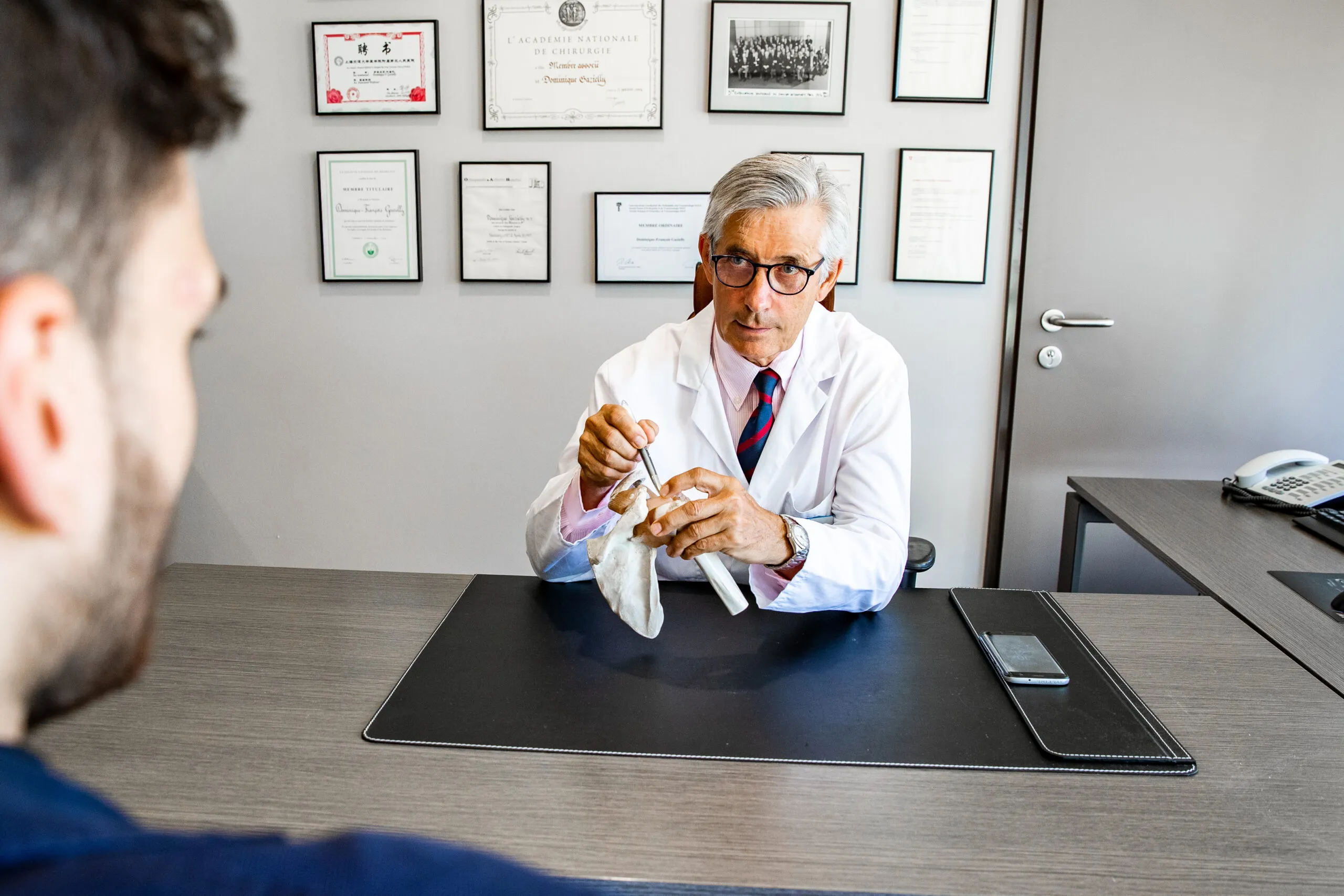
1. Listening to the Patient
There are 2 main reasons why a patient consults us:
- Insomnia-causing night pain
- A shoulder that dislocates
I. Night pain
This is the leading reason for consultation: the patient is woken every night by pain in the shoulder and arm when sleeping on their side.
It is necessary to know more about the patient consulting for this sleep-depriving pain:
- Age
- Painful side, dominant side (right- or left-handed)
- Occupation: office work (computer mouse), sales (driving), manual work (carpenter, mason, painter, electrician…)
- Hobbies: contact sports (judo, rugby, football), racquet sports (tennis), volleyball, handball, basketball, canoe-kayak, hunting, fly fishing, DIY, gardening…
- History of a fall onto the shoulder, old or recent.
- Medical history: diabetes, heart problems…
What type of pain?
- Progressive onset, often insidious, sometimes sudden and very intense, unbearable (think of the spontaneous rupture of a rotator cuff calcification).
- Duration of the pain and effectiveness of treatments already prescribed: painkillers, anti-inflammatories, cortisone injections, ultrasound, rehabilitation, etc.
- Night pain is accompanied by pain during many everyday movements: doing one's hair, washing, dressing, fastening a bra, tucking in a shirt, driving, reaching for an object on a shelf, a parking ticket…
- The patient reports that the painful shoulder is less mobile, stiff, seized up.
II. A shoulder that dislocates
This is a frequent reason for consultation among young athletes worried that their shoulder is dislocating more and more often during their favourite sport, sometimes even while sleeping. This is an unstable shoulder.
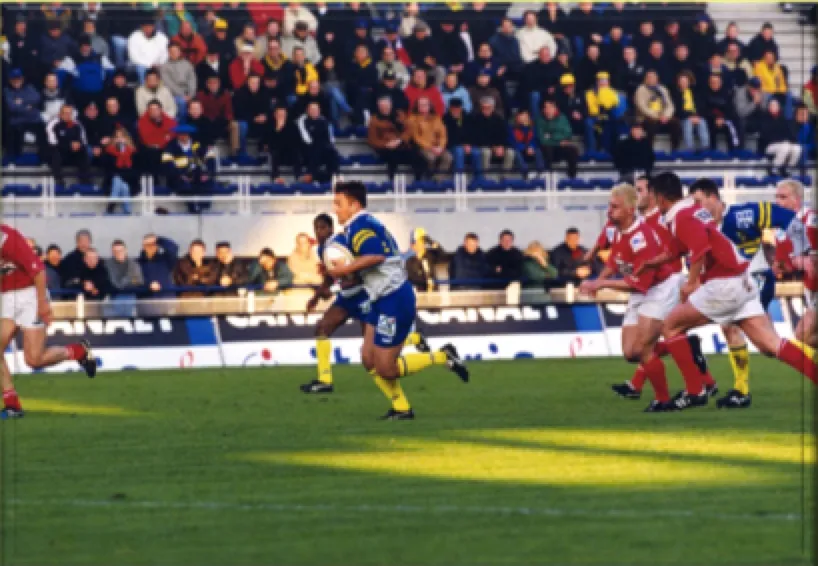
- It is necessary to know the type of sport practised: rugby, football, judo, canoeing, windsurfing…
- When did the first instability episode occur?
- Did the dislocated shoulder go back into place by itself (subluxation), or was a trip to hospital needed to relocate it (true dislocation)?
- How many subluxation and/or dislocation episodes have there been?
- Has rehabilitation been prescribed?